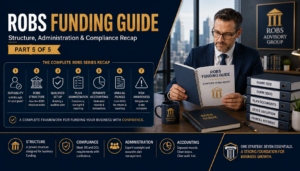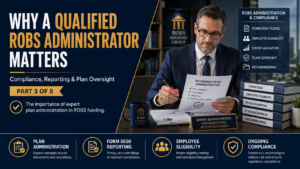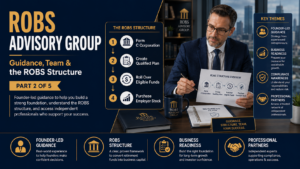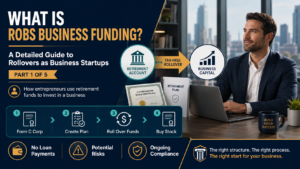
Understanding the Dual Recordkeeping Environment
When operating a business funded through a ROBS (Rollovers as Business Startups) arrangement, it is crucial to maintain accurate and segregated financial records. Specifically, a ROBS-funded business typically involves at least two distinct recordkeeping environments: the C corporation’s business books and the qualified retirement plan’s records. This separation is not merely a formality; it is essential for compliance with IRS and Department of Labor regulations.
Key Recordkeeping Components for a ROBS-Funded C Corporation
Maintaining well-organized records is a fundamental aspect of running a ROBS-funded C corporation. Important recordkeeping elements include:
- Separate Bank and Custodial Accounts: Open dedicated business bank accounts and a retirement plan custodial account to isolate business funds from retirement assets.
- Clean General Ledger: Ensure your general ledger is meticulously organized, accurately reflecting all transactions related to the business and retirement plan.
- Source Documents: Keep supporting documents such as invoices, receipts, and contracts that substantiate all business transactions.
- Corporate Stock/Share Records: Document and maintain records of stock issuance and ownership to ensure clarity of ownership interests.
- Board and Shareholder Actions: Record any resolutions or actions taken by the board of directors and shareholders, particularly those affecting corporate governance.
- Payroll Records: Maintain comprehensive payroll records for employees, including working owners, to document compensation accurately.
- Employee Census and Eligibility Data: Track employee participation data in the retirement plan to ensure compliance with eligibility rules.
- Plan Contributions and Distributions: Carefully document all contributions to and distributions from the retirement plan.
- Rollover Documentation: Retain records of any rollovers of eligible retirement assets into the new plan.
- Plan Asset Records: Keep detailed records of the retirement plan’s assets, including employer stock and related transactions.
- Defensible Fair-Market-Value Documentation: Maintain professional valuations or other evidence to support the fair market value of employer stock for compliance purposes.
Payroll Considerations
Accurate payroll management is critical for any business, especially for ROBS-funded entities where owners might also be employees. Correctly structuring payroll ensures compliance with federal regulations and is essential for maintaining the integrity of the related retirement plan. Proper administration helps avoid complications with payroll taxes and potential issues with the IRS.
Common Federal Forms for ROBS-Funded C Corporations
Additionally, understanding relevant federal forms and their purposes is vital for compliance. Common filings that may apply include:
- Form 1120: This is the corporate income tax return that ROBS-funded C corporations must file annually.
- Form 5500: Required for retirement plans, it documents the plan’s financial condition, investments, and operations. Note that the one-participant $250,000 filing exception does not apply to ROBS plans because such plans own company stock.
- Forms 941 and W-2: These forms are used for reporting payroll taxes and employee wages, ensuring compliance with federal payroll tax obligations.
- Form 940: This form may be required for federal unemployment tax filings when applicable.
- Form 1099-R: This form documents any distributions or rollovers and is necessary when applicable; it is not an automatic annual form.
Be aware that additional federal, state, local, and plan-specific filings might be required based on the unique nature of your business.
Choosing the Right Professionals
Due to the complexities of ROBS arrangements, it is imperative to engage qualified independent professionals to handle various aspects of business operations:
- Accountants and Bookkeepers: For maintaining accurate financial records and preparing tax returns.
- Tax Advisors: To provide guidance on tax implications and ensure compliance with tax regulations.
- Retirement Plan Administrators: To administer the qualified retirement plan according to legal requirements.
- Valuation Experts: For providing fair market valuations of the corporate stock.
- Legal Professionals: To ensure corporate governance and compliance with retirement plan regulations.
ROBS Advisory Group provides advisory and educational guidance to help you navigate these various aspects, but does not perform these specialized services.
The Risks of ROBS Funding
While ROBS can provide unique benefits by allowing business owners to utilize retirement funds for legitimate business expenses, it is essential to recognize the associated risks. Investing retirement assets in a business exposes those funds to business losses. Therefore, conducting thorough business viability assessments, evaluating operational costs, and understanding capitalization needs is crucial before pursuing this funding avenue.
Conclusion
Accurate bookkeeping, accounting, and compliance with annual tax filings are critical components for any ROBS-funded business. By understanding the importance of maintaining distinct records for both the C corporation and its retirement plan, and by engaging qualified professionals, you can significantly enhance your chances of a successful business venture. ROBS Advisory Group is available to assist you in evaluating your specific circumstances and addressing any underlying questions you may have regarding ROBS funding.